NYC Black Car Service vs. Rideshare for Corporate Accounts: A True Cost Comparison
You've probably run the numbers before. Rideshare looks cheaper per ride, the app is familiar, and getting it approved through finance felt easy. But if you're managing executive travel for a company that moves people regularly, the per-ride price is only part of what you're actually paying. The rest shows up in expense report headaches, unpredictable billing, and the kind of missed pickup that turns into an awkward conversation with a client. A true cost comparison between black car service and rideshare for corporate accounts looks a lot different once you account for everything on the invoice.
Why Rideshare Feels Like the Default
It's worth acknowledging why rideshare became the go-to option for so many corporate travel programs in the first place. The convenience argument is real.
The Appeal Is Obvious
Apps are easy. Expense submission is straightforward enough for individual travelers. For a small team with occasional travel needs, the low barrier to entry makes sense. There's no account to set up, no contract to negotiate, and no minimum volume requirement.
Where the Logic Breaks Down
The problem starts when travel volume scales. Once you're booking 20, 50, or 100 rides per month across multiple travelers, the things rideshare doesn't offer start to matter: consolidated invoicing, consistent vehicle quality, reliable driver behavior, and a single point of contact when something goes wrong. At that point, the per-ride convenience starts costing more than it saves.
The Real Price of Rideshare for Corporate Travel
The most common objection to corporate transportation is price. And on a single-ride basis, that objection is sometimes valid. Where it falls apart is in the full accounting.
Surge Pricing Is a Budget Problem
Rideshare pricing is dynamic, which means every booking during peak hours, bad weather, or high-demand periods costs more. For a company with consistent travel patterns, such as executives heading to JFK on Monday mornings or returning from Newark on Sunday nights, surge pricing isn't an occasional inconvenience. It's a predictable, recurring cost that nobody's factoring into the annual travel budget. A flat-rate black car service has no surge. The rate you quoted is the rate you pay.
Expense Reconciliation Is a Hidden Labor Cost
Someone on your team is collecting receipts, matching them to travelers, catching personal charges mixed in with business rides, and reconciling everything at month end. That's real labor time, and it scales with the number of employees using the platform. A corporate black car service account delivers consolidated invoicing, cost center allocation, and itemized billing. The administrative burden disappears.
The Per-Ride Price Doesn't Include the Tip Math
Rideshare fares don't always reflect the final amount charged. Tips, tolls, wait time fees, and cancellation charges all add to what you're actually spending per trip. Flat-rate black car service cost is transparent. You know the number before the car leaves the garage.
What a Corporate Black Car Service Actually Includes
Professional black car service for corporate accounts isn't just a nicer car. It's a different operational model from the ground up.
Flight-Aware Scheduling
When an executive's flight lands early or gets delayed, a professional chauffeur already knows. Flight tracking is built into dispatch, which means the car adjusts in real time. Rideshare doesn't offer this. You're booking based on your scheduled arrival and hoping the timing holds. With airport transportation handled through a professional service, the driver's schedule reflects your actual arrival, not your planned one.
Professional Chauffeurs, Not Gig Workers
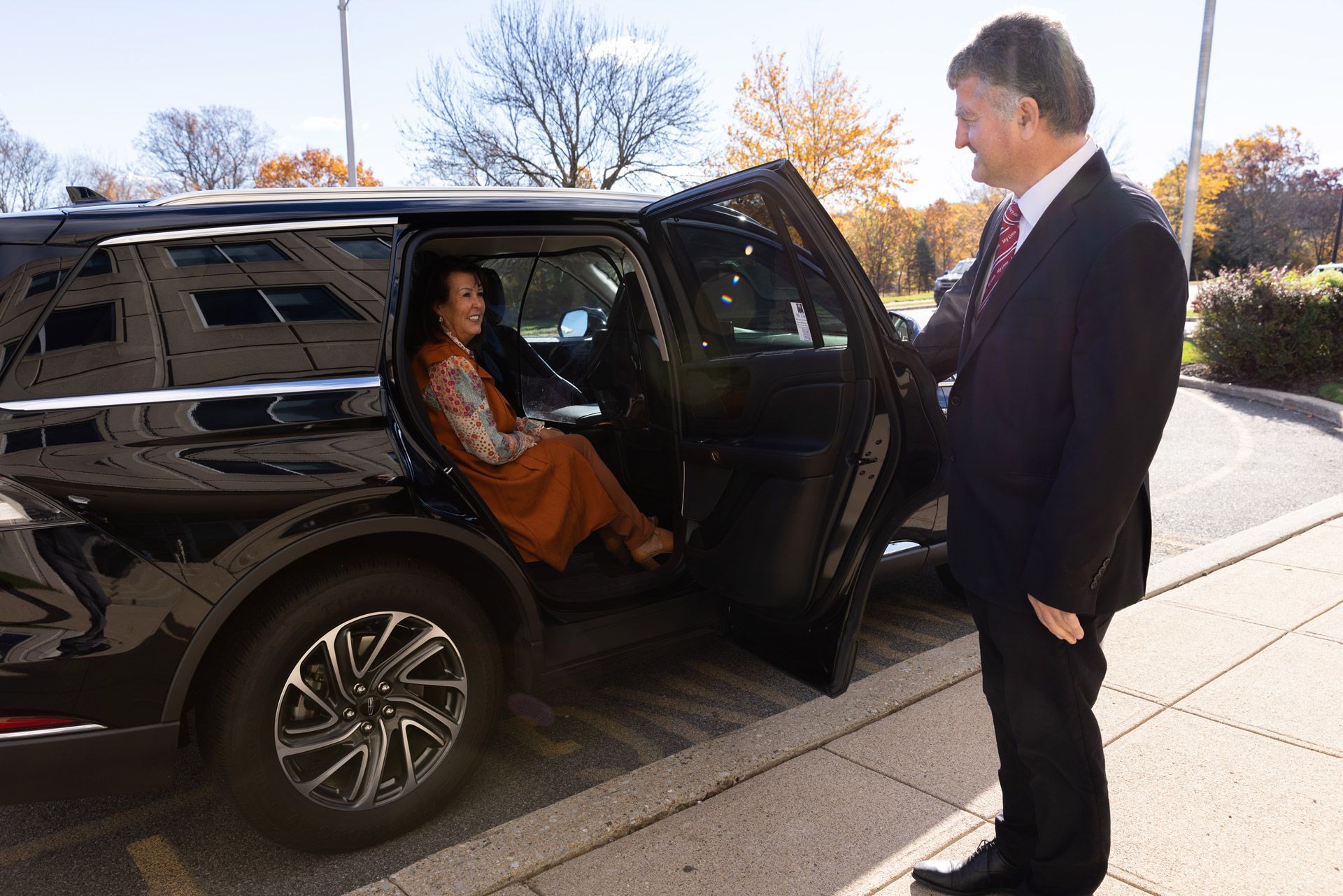
The distinction between a professional chauffeur and a rideshare driver isn't just about the vehicle. It's about training, background checks, professional standards, and accountability. Chauffeurs working through a licensed carrier represent the company they work for every time they're on a job. There's a name attached to that standard. Rideshare drivers are independent contractors with variable levels of professionalism and no ongoing relationship with your account.
A Dedicated Account Relationship
When something goes wrong with a rideshare pickup, you submit a ticket to a support queue. With a corporate black car account, you call your account manager. That's not a small distinction when an executive is standing at baggage claim and the car isn't there.
Choosing the right transportation vendor for your corporate program is one of those decisions that looks minor until it isn't. My Limo has been managing corporate ground transportation for companies across the NJ/NYC metro area for over 40 years, with flat-rate pricing, consolidated billing, and flight-aware dispatch built into every account.
Explore Corporate Transportation Services
Reliability Isn't a Soft Benefit. It's a Business Risk.
There's a tendency to treat transportation reliability as a quality-of-life issue rather than a business risk. That framing undersells the actual exposure.
The Client-Facing Pickup Problem
If a rideshare driver cancels on one of your executives heading to an internal meeting, that's annoying. If a driver cancels on an executive who's picking up a client from the airport, it's a vendor relationship problem. The impression you make in the first hour of a client visit starts before they walk in the door. A no-show isn't a minor inconvenience at that point; it's a reflection of how your company operates.
Consistency at Scale
Rideshare quality varies by driver, time of day, and location. You can't predict whether the car that shows up will be clean, whether the driver will know where they're going, or whether they'll conduct themselves professionally. A professional black car service delivers the same standard every time because that standard is the product.
How Corporate Account Billing Actually Works
One of the most underestimated advantages of a professional executive transportation program is what happens after the ride.
Centralized, Structured Invoicing
Rather than reimbursing individual travelers from a stack of app receipts, your team receives a single consolidated invoice covering all rides in the billing period. You can allocate by cost center, by department, or by individual traveler. That structure integrates cleanly into most corporate expense and AP workflows.
No Surprise Charges
Black car service cost for corporate accounts is agreed upon in advance. Flat rates by route, vehicle type, and service level mean there's no month-end reconciliation surprise. What was quoted is what was invoiced.
When Rideshare Still Makes Sense
A fair comparison acknowledges that rideshare has a legitimate use case in corporate travel. For ad hoc, low-stakes trips where the traveler has flexibility and there's no client-facing or time-critical element, the convenience of rideshare is a reasonable choice. The mistake is treating it as the default for all corporate ground transportation rather than the right tool for a specific type of need.
For executive airport transfers, client pickups, road shows, multi-city programs, and any trip where the stakes are higher than a quick errand, the economics and reliability of black car service for corporate accounts hold up clearly.
Build a Program That Doesn't Leave You Explaining a No-Show
My Limo has been managing corporate ground transportation for companies across New Jersey and the NYC metro area since 1983. The fleet runs from sedans and SUVs to executive sprinters and motorcoaches, with flat-rate billing, flight-aware dispatch, and a named account team for every corporate client. If your current program is creating more problems than it's solving, let's talk about what a structured corporate account looks like for your organization. Reach out to the My Limo corporate team to start that conversation.